Selling a House with
a Lien in Florida.
The Lien Gets Paid at Closing.
A lien on the title does not prevent a sale. It gets paid from the proceeds at closing. You do not write a check before the sale. The title company handles the payoff and the title clears at closing.

A property lien is a legal claim recorded against your title by someone who is owed money. That someone could be a lender, the IRS, a contractor, your HOA, or a court. It does not mean the house cannot be sold. It means there is a financial obligation attached to the title that must be resolved before clear title can transfer to a new owner.
In almost every case, that resolution happens at closing. Not before. The sale proceeds pay off the lien, the title company records the release, and the seller receives whatever equity remains. You do not need to pay the lien out of pocket before accepting an offer.
Six types of property liens in Florida. What each one means for your sale.
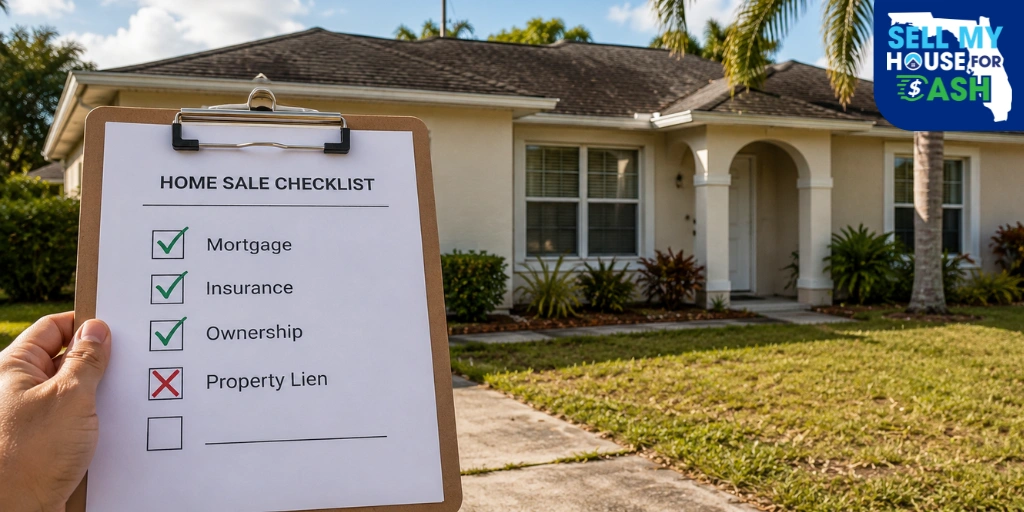
Different lien types have different origins, different payoff processes, and different negotiation possibilities. Here is what you need to know about each one.
Mortgage lien and HELOC
The most common lien on any property. Your primary mortgage and any home equity line of credit are recorded as liens against the title. These are paid off first at closing from the sale proceeds. Most sellers already know about these. The title search simply confirms the payoff amounts.
Tax lien. IRS or Florida property tax.
An IRS federal tax lien attaches to all property you own when you have an unpaid tax debt. Florida property tax liens arise from unpaid real estate taxes. Both are paid at closing from proceeds. The IRS has programs including the Fresh Start initiative that allow lien releases or subordination in connection with a sale.
Mechanic lien. Unpaid contractor.
A contractor, subcontractor, or supplier who was not paid for work performed on your property can file a mechanic lien under Florida Statutes Chapter 713. This is one of the most negotiable lien types. Contractors often accept a settlement for less than the full amount rather than pursue litigation.
Two additional lien types appear regularly on Florida title searches. HOA liens arise from unpaid homeowner association dues and assessments. Associations are permitted to record liens for delinquent amounts and in some cases pursue foreclosure. Like mechanic liens, HOA liens are often negotiated down at closing. Judgment liens result from a court judgment against you personally. The creditor records the judgment against your property to secure collection. Judgment liens are paid from closing proceeds just like any other encumbrance. For an overview of how liens work from a consumer perspective, see the IRS guide to federal tax liens. For Florida mechanic and contractor lien law, see Florida Statutes Chapter 713.
Not sure what type of lien you have? Call us and describe what you found on the title search. In one conversation we can help you understand the lien type, the likely payoff process, and whether a cash sale makes sense for your situation. No cost, no pressure.
If your lien is a code violation fine recorded against the title, we have a dedicated guide covering that situation in detail: Selling a House with Code Violations in Florida. If the lien has triggered foreclosure proceedings, see: How to Stop Foreclosure in Florida.
You do not have to pay the lien before selling. Here is what actually happens.
This is the most important thing we can tell you. The lien does not prevent the sale. It is resolved as part of the closing process.
How liens are handled at closing
Before closing, the title company conducts a full title search and identifies all recorded liens against the property. They then request payoff statements from each lien holder — the exact amount required to release the lien. At closing, the sale proceeds are distributed in order: first the mortgage balance, then any other liens, then the seller receives the remaining equity. The lien holders receive their payoffs, record the releases, and the buyer receives clear title. You never write a check before the sale. The entire process is handled by the title company as part of a normal closing. For a plain-language explanation of what this means for your sale, see the Nolo guide to Florida seller disclosure requirements.
Why retail buyers cannot close. But cash buyers can.
A retail buyer using mortgage financing needs clear title before their lender will fund the loan. The lender will not close with an unresolved lien on the property. This is why sellers with liens hear "the lien has to be cleared first" from agents and lenders. A cash buyer does not have a lender. They can close with the lien in place. The payoff happens simultaneously at closing rather than in advance. This is the fundamental reason cash buyers can move on lien properties when retail buyers cannot.
The numbers above are illustrative. Every situation is different depending on the lien types, amounts, and the sale price. What does not change is the process. The title company handles the payoff coordination and the seller receives whatever equity remains after all encumbrances are cleared.
Want to know exactly what you would net after the liens are cleared? Call us with the property address and what you know about the liens. We will walk you through the full closing math on the first call so you can see exactly what you net before you commit to anything.
What if the lien amount is more than your equity?
Most sellers have enough equity to cover their liens. But if the total of your mortgage balance plus liens is close to or exceeds the sale price, you have a few options worth understanding before you decide anything.
Some liens can be negotiated for less than the full amount
Mechanic liens are frequently settled for less than the recorded amount. Contractors often prefer a certain payment over an uncertain legal process. HOA associations commonly reduce accumulated penalties and fees for a clean settlement at closing. IRS tax liens have structured programs including the Fresh Start initiative and offers in compromise that allow partial settlements in cases of genuine financial hardship. None of these negotiations need to happen before you accept an offer. A title company or real estate attorney can handle the negotiation as part of the closing process.
Short sales. When the total debt exceeds the sale price.
If the total amount owed across your mortgage and all liens genuinely exceeds what the property will sell for, a short sale may be an option. In a short sale the lender agrees to accept less than the full mortgage balance to allow the sale to close. Short sales require lender approval and take longer than a standard sale. But they can be the right path when there is no other way to close. We have worked with sellers in short sale situations and can help you understand whether it applies to your specific circumstances. For complex negative equity situations, consulting a real estate attorney before accepting any offer is strongly recommended.
For a full breakdown of the cash offer option and how it compares to a traditional listing, read: Pros and Cons of a Cash Offer on a House. If you are considering selling without an agent, see: How to Sell a House Without a Realtor in Florida.
Three ways Florida homeowners sell a property with liens
Here is an honest look at your options depending on your lien situation.
To understand net proceeds after fees and costs, see: How much do you lose selling a house as-is?
Can liens be negotiated down before or at closing?
Not every lien must be paid in full. Understanding which types are negotiable can meaningfully change what you net at closing.
Mechanic liens are among the most negotiable. The contractor or supplier who filed the lien typically prefers a certain payment to the uncertainty of pursuing litigation. Settlements for 50 to 70 cents on the dollar are common. HOA associations frequently reduce accumulated penalties and late fees for a clean settlement. The association gets paid and moves on. IRS tax liens are more structured but still negotiable in hardship situations. The Fresh Start program, offers in compromise, and partial pay installment agreements all exist specifically to allow lien resolution when full payment is not possible. Florida property tax liens have their own resolution process through the county tax collector. A title company or real estate attorney familiar with lien resolution can negotiate on your behalf as part of the closing preparation.
Have a mechanic lien or HOA lien you think is inflated? Call us before you pay anything. We have experience with lien negotiations and can help you understand whether a settlement is realistic before you commit to a path. For the full picture of as-is selling: Selling a House As-Is in Florida.
What if the lien holder tries to block the closing?
This is a fear we hear often and it almost never happens in practice. A lien holder has recorded their claim because they want to be paid. A closing where they receive full payment is exactly what they want. They cannot legally block a valid payoff.
The title company requests the payoff statement, the lien holder provides the amount, and the funds are wired at closing. The lien holder receives their money and records a satisfaction or release. This is a routine process that title companies handle on nearly every transaction. The only time a lien holder can complicate a closing is if there is a genuine dispute about the lien amount or validity. That is a situation for a real estate attorney, not a reason to avoid selling.
If you have a disputed lien. One you believe was recorded in error or for an amount you disagree with. That dispute can often be resolved in parallel with the sale process. A real estate attorney can file to discharge or reduce the lien while the sale moves forward. The key is not to let an unresolved lien dispute stop you from exploring your options.
Think your lien may be in error or disputed? Call us. We can help you understand whether the dispute affects the sale timeline and what steps typically resolve it fastest. One conversation before you take any action is always worth it.
Five mistakes Florida sellers make with lien properties
These are the mistakes that cost lien sellers the most time and money.
Assuming the lien prevents any sale
The most common and most costly misconception. A lien does not prevent a sale. It is resolved as part of the closing process. Sellers who believe the lien blocks them entirely stop exploring options and either let the property sit while the lien grows, or pay the lien out of pocket unnecessarily. Call us before you do either.
Paying off the lien out of pocket before selling
Many sellers pay down a lien before listing because they were told it is required. In most cases it is not. Paying the lien upfront depletes cash the seller needs for other purposes and is almost never required for a cash buyer sale. If you are exploring the no-agent path, see: How to Sell a House Without a Realtor in Florida.
Not disclosing known liens to the buyer
Florida requires sellers to disclose known encumbrances on the title. A lien that appears on a title search is a matter of public record. The buyer or their attorney will find it. Attempting to conceal a lien creates post-closing legal exposure. Disclose everything. A cash buyer who knows about the liens upfront has already factored them into the offer. There are no surprises and no renegotiations.
Letting the lien grow while deciding what to do
Most lien types accrue interest and penalties over time. An IRS tax lien compounds with interest and penalties. A mechanic lien may have contractual interest. An HOA lien accumulates monthly fees. Every month of inaction increases the payoff amount and reduces what the seller nets at closing. The sooner you act, the less the liens will cost you.
Choosing a cash buyer not experienced with lien closings
Lien closings require coordination between the title company, lien holders, and the buyer. A cash buyer who has not done this before can cause delays, miscommunications, and in rare cases a failed closing. When we make an offer on a lien property we have already reviewed what is known about the liens. Our partner investors verify the property condition during the inspection period. If everything checks out, the price holds. If something was not disclosed that materially affects the value, we will explain exactly what it is and why. The decision is always yours. Walk away at any point. No pressure, no hard feelings. Read what our sellers say: verified Google reviews.
Why Florida homeowners with property liens trust Sell My House For Cash Florida
Lien closings require experience, patience, and a title company that knows what it is doing. Here is what sets us apart.
We have closed on properties with multiple simultaneous liens
Tax liens, mechanic liens, HOA liens — we have closed with all of them on the same property. There is no lien combination that automatically disqualifies a sale. Learn more about who we are: About Us.
We work with experienced title companies
Our title partners handle lien payoff coordination routinely. They know how to request payoff statements, negotiate with lien holders, and process releases efficiently. You never have to deal with the lien holders yourself.
You know exactly what you net before you sign
We walk through the full closing math on the first call — sale price, mortgage payoff, lien payoffs, and your net proceeds. No surprises at the closing table. See how the process works: How We Buy Houses.
Transparent offer. Liens factored in from day one.
We walk you through every line of the offer on the first call. If our partner investors identify a major undisclosed issue during the inspection period, we will tell you exactly what it costs and why. You are never obligated to accept any revision.
"Juan made the process of selling my home straightforward and stress free. He was upfront about everything, answered all my questions, and closed exactly when he said he would. I would not hesitate to recommend him."
The lien is not going away on its own.
Let us help you close.
Most liens accrue interest or penalties over time. Every month you wait the payoff grows and your net shrinks. Tell us about the property and the liens. We will walk you through the closing math, show you exactly what you net, and close in 3 to 4 weeks. No upfront lien payments. The title company handles everything.
Get a free offer. We close on lien properties.
"*" indicates required fields
No obligation. No pressure. No spam. Your information is never shared.
Prefer to talk? Call us at 561-786-7720