Selling a House with
Code Violations in Florida.
You Do Not Have to Fix Them First.
Whether you received a notice yesterday or have had violations for years, you can sell. You do not have to fix the violations, fight the city, or hire an attorney before closing. We handle it.

A code violation notice feels like a wall between you and the sale of your property. Agents tell you to fix it first. Contractors quote you numbers that do not make sense. The city keeps sending notices. And the fines keep growing. You feel stuck.
You are not stuck. Florida homeowners sell properties with open code violations, unpermitted work, and accumulated fines every week. The key is understanding what each type of violation actually means, what happens to the fines at closing, and why a cash buyer is almost always the fastest and cleanest path out.
What kind of code violation do you have? Does it block the sale?
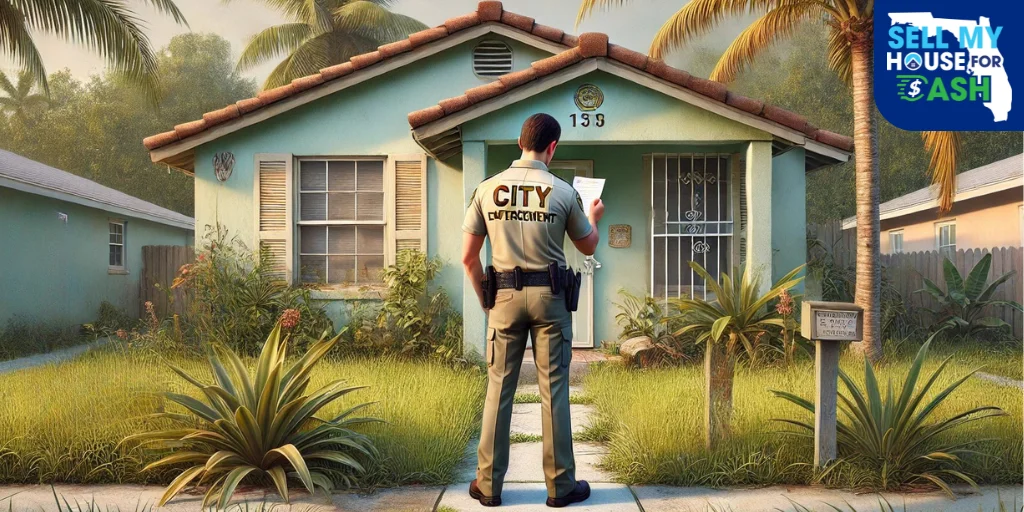
Not all violations are created equal. Here are the five most common types we see in Florida and what each one means for your ability to sell.
Unpermitted work
Additions, garage conversions, electrical upgrades, or structural changes done without pulling a permit. This is the most common violation we see. Retail buyers often cannot get financing on a property with unpermitted work. A cash buyer factors it into the offer and handles the permit resolution after closing.
Overgrown grass or yard debris
Many sellers do not realize this qualifies as a code violation. Florida municipalities can cite properties for overgrown vegetation, accumulating debris, or unmanaged lots. Daily fines for these violations can accumulate into significant liens surprisingly quickly.
Visible exterior deterioration
Peeling paint, damaged soffits, broken windows, crumbling stucco. Florida cities cite these as safety and blight violations. Common on older homes and properties that have been vacant or neglected. We buy them.
Two additional violation types we see regularly: unsafe structures or additions — screened enclosures, sheds, or carports built without permits or out of compliance with current building codes — and plumbing, septic, or drainage issues — failed septic inspections, drainage violations, or unpermitted plumbing work, which are among the most expensive violations to address and the ones most likely to prevent retail financing entirely. Florida's municipal code enforcement framework is governed by Florida Statutes Chapter 162. For seller disclosure requirements that apply to all of these, see the Nolo guide to Florida seller disclosure.
Not sure which type of violation you have? Call us and describe what you received. In one conversation we can help you understand exactly what you are dealing with and whether a cash sale makes sense. No cost, no pressure.
If your property has multiple issues beyond the violation — deferred maintenance, tenant damage, or major condition problems — our full guide covers the broader picture: Selling a House As-Is in Florida.
You do not have to clear the fines or fight the city yourself.
This is the part most sellers do not know. And it changes everything.
Unpaid fines often become liens on the property
When code fines go unpaid long enough, the municipality records a lien against the property. That lien shows up on the title search before closing. Many sellers panic when they find out. A lien on the title does not prevent the sale. It is paid off from the sale proceeds at closing, just like a mortgage payoff. You do not need to know the exact amount owed. You do not need to negotiate with the city. You do not need to hire an attorney. The title company handles the lien payoff as part of the closing process.
We work with the city and title company so you do not have to
We have done this many times. We know how Florida municipalities handle code enforcement payoffs at closing. We coordinate with the city to confirm the total amount owed, the title company processes the payoff, and the balance after all liens and costs are cleared comes to you. You never sit across a table from a code enforcement officer. You never negotiate. You never write a check before the sale.
The numbers above are illustrative. Every situation is different depending on the type of violation, how long fines have been accumulating, and the property value. What does not change is the process: the lien is paid at closing from the proceeds, and you walk away clean.
Already have a lien recorded against the property? Call us. A recorded lien does not change our ability to buy the property. We will confirm the payoff amount with the city and factor everything into the offer so you know exactly what you net before you sign anything.
Do you have to disclose code violations when selling in Florida?
Yes. Disclosing them is the right move financially as well as legally.
Disclosure protects you legally
Florida requires sellers to disclose all known material defects to buyers. This includes open code violations, unpermitted work, and recorded liens. This applies whether you are selling to a retail buyer or a cash investor. Failing to disclose a known violation does not make it disappear. It creates post-closing liability where the buyer can pursue legal action for the cost of remediation. Full disclosure ends your legal responsibility for the violation history.
Disclosure protects you financially
A cash buyer who knows about the violations upfront has already priced them into the offer. There are no surprises, no last-minute renegotiation, no post-inspection price reduction demands. The number you agree to is the number you close with. As long as the condition and violation history match what you described. Be upfront with us about everything you know and we will not have to come back to the table.
For a full overview of what Florida sellers are required to disclose, see the Nolo guide to Florida seller disclosure requirements. For the pros and cons of a cash offer on a violation property, see: Pros and Cons of a Cash Offer on a House. If you are exploring the no-agent path, see: How to Sell a House Without a Realtor in Florida.
Three ways Florida homeowners handle a property with code violations
There is no single right answer. Here is an honest look at all three paths.
For a full breakdown of the cash offer option, read: Pros and Cons of a Cash Offer on a House. To understand net proceeds after fees and violation costs, see: How much do you lose selling a house as-is?
Is it worth fixing the violations before selling?
The instinct to fix violations before selling makes sense on the surface. A clean title, no open permits, no fines. That should mean a higher sale price and a larger buyer pool. In practice, the math almost never supports it.
Pulling permits costs money and takes time. Contractors charge market rates. Inspectors have to reinspect and sometimes find additional violations in the process. And while all of that is happening, the daily fines continue accumulating. A $50-per-day fine adds $1,500 per month to the lien balance. A remediation process that takes 60 days costs you $3,000 in fines alone before you spend a dollar on the actual work. By the time the violations are resolved and the property is listed, the total cost has consumed most or all of the price premium a clean property might have commanded.
Our partner investors have their own experienced crews. Their remediation costs are significantly lower than what you would pay hiring a contractor on the open market. That saving is passed directly to you in the offer. Call us before spending anything on violations and we will run the numbers side by side so you can make a fully informed decision.
Want to run the numbers for your specific property? Call us before you spend anything on violations. We will walk you through what fixing would cost versus what we can offer as-is, so you can make a fully informed decision. See the full net proceeds comparison: How much do you lose selling a house as-is?
Have a question about your specific violation? Call us before making any decisions. We will tell you honestly whether fixing first makes sense or whether selling as-is puts more money in your pocket.
Five mistakes Florida homeowners make with code violation properties
These are the mistakes that cost sellers the most time and money.
Trying to fix violations without understanding what the city actually requires
Many sellers start spending on repairs before confirming with the city exactly what compliance requires. What looks like a simple fix can trigger additional inspections, uncover more violations, or require permits that take months to approve. Before spending a dollar, call code enforcement and get the full scope in writing.
Listing with an agent who does not know how to handle a violation property
Most agents specialize in market-ready homes. A property with open violations, unpermitted work, or a recorded lien requires a different approach — different comparable sales, a different buyer pool, and a different pricing strategy. An agent who prices it at retail values will watch it sit while the fines accumulate. If you are exploring the no-agent path, see: How to Sell a House Without a Realtor in Florida.
Not disclosing known violations. The legal and financial risk.
Florida requires disclosure of known material defects including code violations and open permits. A buyer who discovers an undisclosed violation after closing can pursue legal action for the cost of remediation. Often far more than the violation itself was worth. Disclose everything. A cash buyer who knows the full picture upfront will not renegotiate at the last minute.
Letting fines accumulate while deciding what to do
This is the most expensive form of inaction. Municipal fines accrue daily in most Florida jurisdictions. A $50-per-day fine adds $1,500 per month to the lien balance. Sellers who spend three months researching options while fines run have already paid thousands more than if they had called a cash buyer on day one. The sooner you act, the less the lien will be at closing.
Choosing a cash buyer who gets spooked by violations and renegotiates
Some buyers make attractive initial offers on violation properties and then reduce them significantly once they see the full lien amount or the scope of the violations. When we make an offer we have already accounted for the violations, the fines, and the lien payoff. Our partner investors verify the property condition during the inspection period. If everything matches what you described, the price holds. If something significant was not disclosed, we will explain exactly what it costs and why. Nothing is ever final until you say it is. Walk away at any point. No pressure, no hard feelings. Read what our sellers say: verified Google reviews.
Why Florida homeowners with code violations trust Sell My House For Cash Florida
Selling a violation property requires a buyer who has done this before, knows how to work with municipalities, and gives you a number you can trust from day one.
We have bought violation properties before
Unpermitted work, accumulated fines, recorded liens — we have seen every combination. There is no violation situation that automatically disqualifies a property. Learn more about who we are: About Us.
We work with the city and title company for you
You never sit across a table from a code enforcement officer. We coordinate with the municipality to confirm the total amount owed, the title company processes the lien payoff at closing, and the balance comes to you. You do not negotiate with anyone.
Violations and liens paid at closing. No upfront costs.
Every fine, every lien, every outstanding code enforcement balance is paid from the sale proceeds at closing. You do not write a check before the sale. See how the process works: How We Buy Houses.
Transparent offer. Violations factored in upfront.
We walk you through every line of the offer calculation on the first call including the estimated lien payoff. If our partner investors identify a major undisclosed issue during the inspection period, we will tell you exactly what it costs and why. You are never obligated to accept any revision.
"Juan was incredibly professional and made the entire process stress-free. He was upfront about everything and closed exactly when he said he would. I would absolutely recommend him to anyone who needs to sell quickly and without complications."
Stop the fines. Sell the house.
Move on.
Every day the violation sits unresolved the fines grow. One call stops that. Tell us about the property and the violations. We will walk you through our offer, confirm the lien payoff amount with the city, and close in 3 to 4 weeks. You never negotiate with code enforcement. We handle it.
Get a free offer. We handle the violations.
"*" indicates required fields
No obligation. No pressure. No spam. Your information is never shared.
Prefer to talk? Call us at 561-786-7720