Selling a Fire Damaged
House in Florida.
You Have a Way Forward.
A house fire is not just a property event. Whatever you lost in that fire. The home you built, the things inside it, the sense of safety. That matters. When you are ready to talk about what comes next, we are here. You do not have to restore before selling.

House fires happen to Florida homeowners every day. Kitchen fires, electrical failures, brush fires, accidents. Whatever the cause, you are now looking at a property that feels impossible to sell. The situation feels impossible to navigate. It is not impossible. Thousands of Florida homeowners in this exact situation have found a path forward.
You do not have to restore the property before selling. You do not have to manage contractors, fight permit offices, or negotiate code compliance upgrades. A cash buyer who specializes in fire damaged properties can assess the home, make a fair offer, and close in 3 to 4 weeks. Here is what you need to know.
Fire damage is almost always larger in scope than it appears
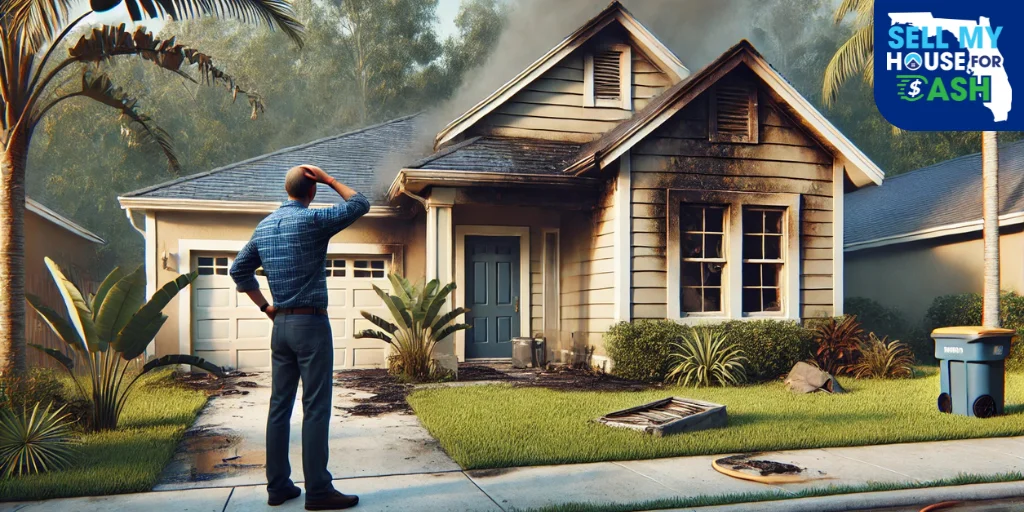
Most sellers see the visible burn area and assume that is the full extent of the damage. It almost never is. Fire damage has layers. Each layer adds to the remediation scope.
Visible fire and char damage
The burn area itself. Structural members, framing, drywall, flooring, roof decking. What you can see. This is usually the starting estimate a contractor gives. It is almost never the final scope.
Smoke and soot penetration
Smoke travels through HVAC systems and penetrates 2 to 3 rooms beyond the visible burn area. Soot settles into wall cavities, insulation, and ductwork. This often costs more to remediate than the visible fire damage itself and requires specialized equipment and cleaning protocols.
Water damage from fire suppression
Firefighting water floods the structure. In Florida's humidity, mold can begin growing within 24 to 48 hours. The combination of fire damage and water intrusion means remediation must address both simultaneously. Total cost runs significantly higher than fire damage alone.
The fourth layer. Code compliance. This is the one that shocks most sellers. In Florida, if fire repairs require building permits, those permits trigger current code compliance. An older home may need its electrical panel upgraded, hurricane straps installed on roof framing, and plumbing brought to current standards. A $30,000 visible repair can become a $90,000 project once code compliance is factored in. For national fire loss context, see NFPA fire loss data. For Florida-specific fire statistics, see the FEMA US Fire Administration.
Not sure of the full scope of your damage? Call us before spending anything on assessments or estimates. We can help you understand what the full remediation scope looks like and whether a cash sale makes more financial sense than restoration. No cost, no pressure.
Fire damage often triggers code violations and open permit issues at the same time. If you have received city notices in addition to the fire damage, see: Selling a House with Code Violations in Florida. For the full picture of as-is selling in any condition, see: Selling a House As-Is in Florida.
Condemned or red-tagged? You can still sell.
This is the most important thing we can tell you. A condemned property is not an unsellable property.
What condemned actually means
When the fire marshal or local building department condemns or red-tags a property, it means the structure is unsafe to occupy. It does not mean the title cannot transfer to a new owner. A cash investor buyer can purchase a condemned property with full knowledge of its status. The condemnation transfers with the title. Not with the seller. You walk away. The investor takes on the remediation, permits, demolition, and code compliance work after closing.
What happens to the property after you sell
Our partner investors buy condemned and red-tagged properties specifically because they have the crews, permits experience, and capital to handle what comes next. They either restore the structure to habitable condition and resell, or in cases of severe damage, demolish and rebuild. Either path is theirs to manage. Not yours. Your responsibility ends at closing.
The numbers above are illustrative. Every property is different depending on the ARV, the extent of damage, and the code compliance scope. What does not change is the process. We walk you through every line of the calculation on the first call so you can see exactly how we got to the number.
Has the property been condemned or red-tagged? Call us before making any decisions. A condemned status does not change our ability to buy the property. We assess the full scope of work, factor it into the offer, and close after you are ready. You never have to step foot in the property again if you do not want to.
What happens to your insurance money when you sell?
Most sellers assume that selling the fire-damaged property means the insurance money goes with it. That is not always true. In many cases the seller keeps the insurance proceeds and still sells the damaged property to a cash buyer as two separate transactions.
Scenario A. Seller keeps the insurance money.
This is the most common and most favorable outcome. If the claim was approved and paid, or can be structured this way, the seller retains all rights to the insurance proceeds. The purchase contract states the seller retains all rights to existing insurance claims. The seller pockets the insurance money and separately receives the cash sale proceeds. Two separate checks. This is negotiated deal by deal and must be written carefully into the purchase agreement.
Scenario B. Claim transfers to the buyer.
If the claim is still open or supplemental claims may exist, the rights can be assigned to the buyer through contract language. The buyer pursues the insurance payout directly. This requires careful documentation and the buyer must understand the claim status fully.
Scenario C. The mortgage lender controls the insurance check.
If a mortgage exists on the property, the insurance check is often payable to both the homeowner and the lender. The lender may hold funds in escrow, require repairs before releasing money, or use proceeds to protect their collateral. This is the most complicated scenario and often requires a real estate attorney. We are not insurance advisors. For complex situations, consult a professional before signing anything.
For a detailed breakdown of all three scenarios including the math, see our full guide: Selling a House with Water Damage in Florida The insurance framework applies equally to fire damage claims. For Florida homeowners insurance resources, see the Florida Office of Insurance Regulation.
What must you disclose about fire damage when selling in Florida?
Florida requires sellers to disclose all known material defects to buyers. For fire damaged properties this includes prior fire damage and the extent of it, smoke and soot damage even in rooms that did not burn, structural damage or compromised load-bearing elements, unresolved insurance claims, open permits or code violations triggered by the fire, and any unsafe electrical, plumbing, or HVAC systems. Trying to hide fire damage history is a serious mistake. Permits, insurance records, fire department reports, and inspection records all document the fire. A buyer or their attorney will find it. A seller who conceals known fire damage creates significant post-closing legal liability.
For what Florida law says about sellers who conceal known defects, see: Nolo. Legal remedies if a Florida seller conceals defects.. For the Florida CFO guide on disaster insurance claims, see: Florida CFO disaster insurance guide.
Three ways Florida homeowners handle a fire damaged property
There is no single right answer. Here is an honest look at all three paths.
For a full breakdown of the cash offer option, read: Pros and Cons of a Cash Offer on a House. To understand net proceeds after fees and repair costs, see: How much do you lose selling a house as-is?
Is full restoration worth the cost before selling?
The instinct to restore makes sense. A fully renovated property should sell for more. In practice, the math rarely works out. Florida fire restoration is expensive before code compliance is factored in. Add the permit-triggered code upgrades and the total project cost often absorbs most or all of the premium a restored property would command over an as-is cash sale.
Consider the carrying costs during a 6 to 12 month restoration project. Mortgage payments, insurance, taxes, utilities on a property you cannot live in. Consider contractor delays, permit office timelines, supply chain issues. Florida's humidity actively worsens mold and moisture damage every week the structure sits open. And when you finally list, buyers and their agents still know it had a fire. They negotiate accordingly. Our partner investors have their own experienced crews. Their restoration costs are significantly lower than open-market contractor rates and that saving is passed directly to you in the offer.
Want to run the numbers for your property? Call us before spending anything. We will show you what we can offer as-is versus what you would realistically net after full restoration costs. For the full net proceeds breakdown: How much do you lose selling a house as-is?
What if your insurance claim is still open, denied, or underpaid?
An unresolved insurance claim adds complexity but does not prevent a sale. Here is how the most common situations play out with a cash buyer.
Claim approved and paid: Best case. Seller keeps the insurance proceeds, sells the property as-is, and nets both amounts separately.
Claim still open: The claim rights can be assigned to the buyer or retained by the seller depending on how the purchase agreement is structured. Both approaches are possible and must be documented carefully.
Claim denied or underpaid: A denial does not end the matter. Florida homeowners can dispute denials and request appraisal. However, fighting a denial takes months while Florida humidity compounds the damage daily. Many sellers choose to sell as-is rather than wait. The cash offer reflects the current condition regardless of what the insurance company does.
Lender on the check: If a mortgage exists and the lender is named on the insurance payout, consult a real estate attorney before signing anything. This is the most complex scenario and the one most likely to need professional guidance.
For the full insurance framework including the math for Scenario A — seller keeps insurance proceeds and sale proceeds separately — see our water damage guide: Selling a House with Water Damage in Florida. The insurance logic is identical for fire damage claims.
Insurance claim open or disputed? Call us before you accept any settlement or sign any assignment. Understanding how your claim structure affects the sale can significantly change what you net. One conversation before you sign anything is worth it.
Five mistakes Florida homeowners make when selling a fire damaged property
These are the mistakes that cost fire damage sellers the most time, money, and stress.
Starting restoration before understanding the full code compliance scope
The first contractor quote is almost always low because it covers only visible damage. Once permits are pulled and inspectors get involved, the code compliance requirements become clear. The scope expands dramatically. Many sellers spend $20,000 to $30,000 before discovering the full project will cost three times their initial estimate. Before spending anything, call us for a second opinion on whether a cash sale makes more sense.
Waiting for the insurance settlement before exploring a sale
Florida insurance claims can take months to settle. Complex fire claims with lender involvement can take even longer. Every week the property sits unaddressed, humidity worsens mold, open structure deteriorates, and carrying costs accumulate. You do not have to wait for the claim to settle before exploring a cash sale. We can often structure the sale to preserve your insurance rights while getting you out immediately. If you want to explore the no-restoration path: How to Sell a House Without a Realtor in Florida.
Not disclosing known fire damage, smoke damage, or open claims
Florida requires disclosure of known material defects including fire history, smoke and soot damage, structural concerns, and unresolved insurance claims. Permits, fire department reports, and insurance records all document the fire. A buyer or their attorney will find it. Concealing known fire damage creates significant post-closing legal exposure. Disclose everything. A cash buyer who knows the full picture upfront has already priced it in.
Assuming a condemned property cannot be sold
Many sellers with condemned or red-tagged properties believe they have no options. They assume the condemnation prevents a sale entirely. It does not. Title still transfers to a cash buyer who accepts the condemned status. The investor takes on the remediation and code compliance after closing. You walk away clean.
Choosing a cash buyer who renegotiates after seeing the full damage scope
Fire damage has layers and buyers who have not properly assessed the full scope before making an offer will come back after inspection with a lower number. When we make an offer we have accounted for the visible fire damage, the smoke penetration, the water damage from suppression, and the code compliance scope. Our partner investors verify the property condition during the inspection period. If the condition matches what you described, the price holds. If something significant comes up that was not disclosed, we explain exactly what it costs and why. Nothing is ever final until you say it is. We can go our separate ways. No hard feelings, no pressure. Read what our sellers say: verified Google reviews.
Why Florida homeowners with fire damage trust Sell My House For Cash Florida
Fire damage requires a buyer who understands the full scope. Not just what burned, but what the smoke reached, what the water damaged, and what code compliance will cost. Here is what sets us apart.
We buy fire damaged properties including condemned
Partial fires, major structural damage, red-tagged properties. We have bought them all. There is no fire damage situation that automatically disqualifies a property. Learn more about who we are: About Us.
We understand the insurance situation
Whether your claim was paid, is still open, was denied, or involves a mortgage lender on the check. We have worked with sellers in every variation. We help you understand how the claim structure affects what you net before you commit to anything.
Offer based on real costs. Not on your situation.
We use the ARV formula: comparable renovated sales minus selling costs, restoration costs at investor crew rates, hard money lending costs, and minimum profit. Your urgency and your circumstances do not change the math. See how the process works: How We Buy Houses.
Transparent offer. Full damage scope priced in from day one.
We walk you through every line of the offer on the first call. If our partner investors identify a major undisclosed issue during the inspection period, we will tell you exactly what it costs and why. You are never obligated to accept any revision.
"Juan helped us sell a property that was in very difficult condition. He was honest, professional, and followed through on everything he promised. He made a very stressful situation manageable. I would recommend him without hesitation."
When you are ready.
We are here.
Tell us about the property and what happened. We will walk you through our offer, explain how the insurance situation affects your net, and close in 3 to 4 weeks. No restoration required. No pressure, no urgency, no judgment. Just a clear path forward.
Get a free offer. We buy fire damaged properties as-is.
"*" indicates required fields
No obligation. No pressure. No spam. Your information is never shared.
Prefer to talk? Call us at 561-786-7720